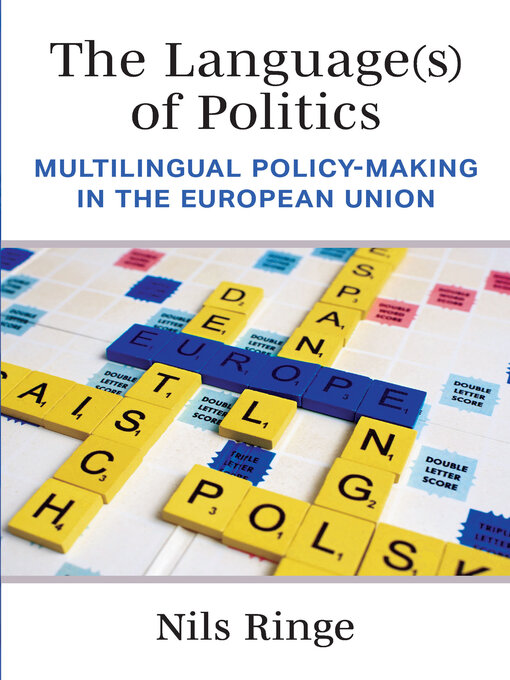
Multilingualism is an ever-present feature in political contexts around the world, including multilingual states and international organizations. Increasingly, consequential political decisions are negotiated between politicians who do not share a common native language. Nils Ringe uses the European Union to investigate how politicians' reliance on shared foreign languages and translation services affects politics and policy-making. Ringe's research illustrates how multilingualism is an inherent and consequential feature of EU politics—that it depoliticizes policy-making by reducing its political nature and potential for conflict. An atmosphere with both foreign language use and a reliance on translation leads to communication that is simple, utilitarian, neutralized, and involves commonly shared phrases and expressions. Policymakers tend to disregard politically charged language and they are constrained in their ability to use vague or ambiguous language to gloss over disagreements by the need for consistency across languages.
- Available now
- Newly Added eBooks
- Most popular
- Newly Added Kids
- Newly Added Teen eBooks
- Try something different
- Read a Classic
- See all ebooks collections
- Available now
- Newly Added Audiobooks
- Most popular
- Newly Added Kids Audiobooks
- Newly Added Teen Audiobooks
- Hidden Gems
- See all audiobooks collections